Counting the Cost of Exclusion:
Uganda's Unfinished Promise of Inclusive Education
Written by: Maria Cornneria Atuhairwe
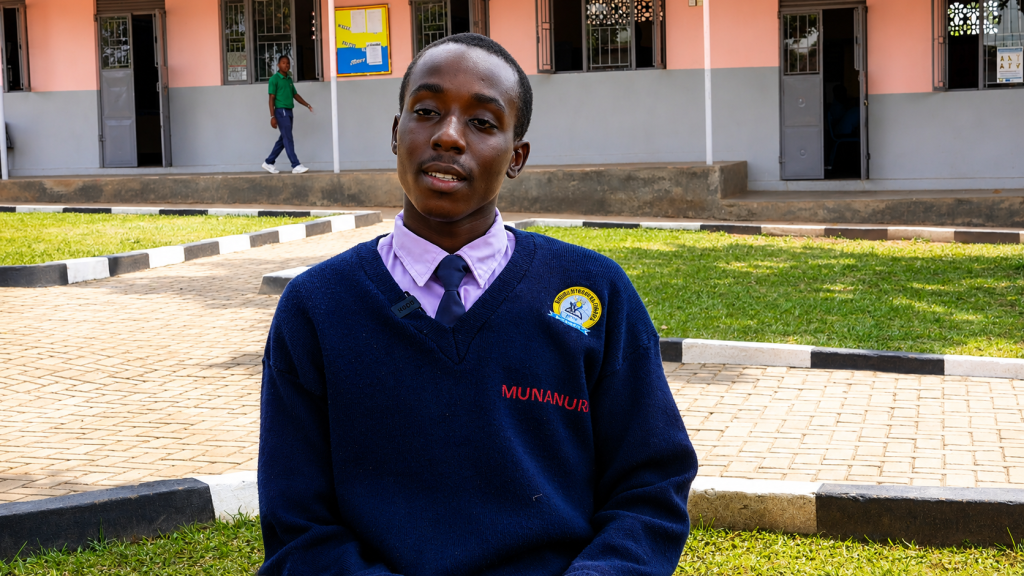
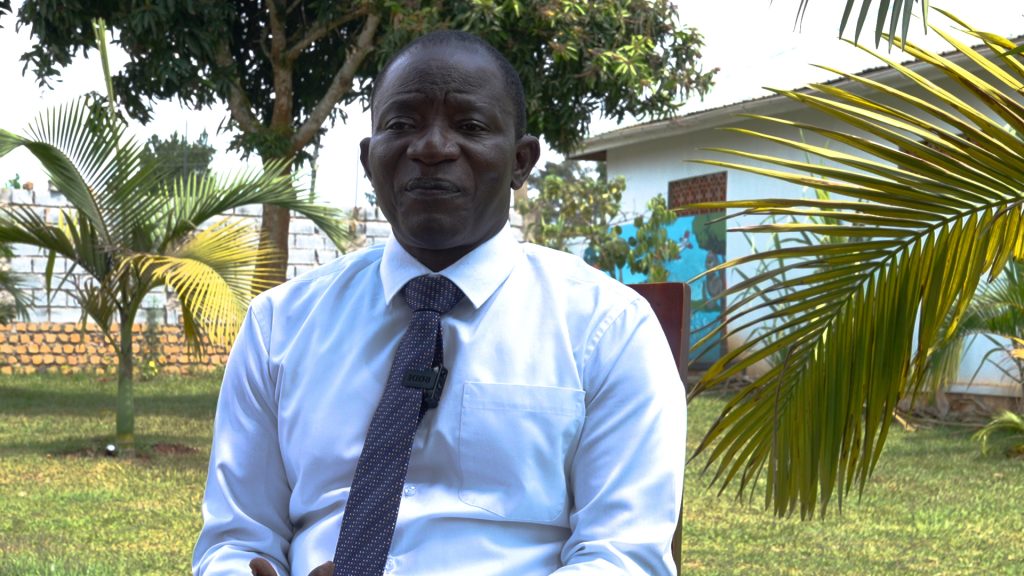
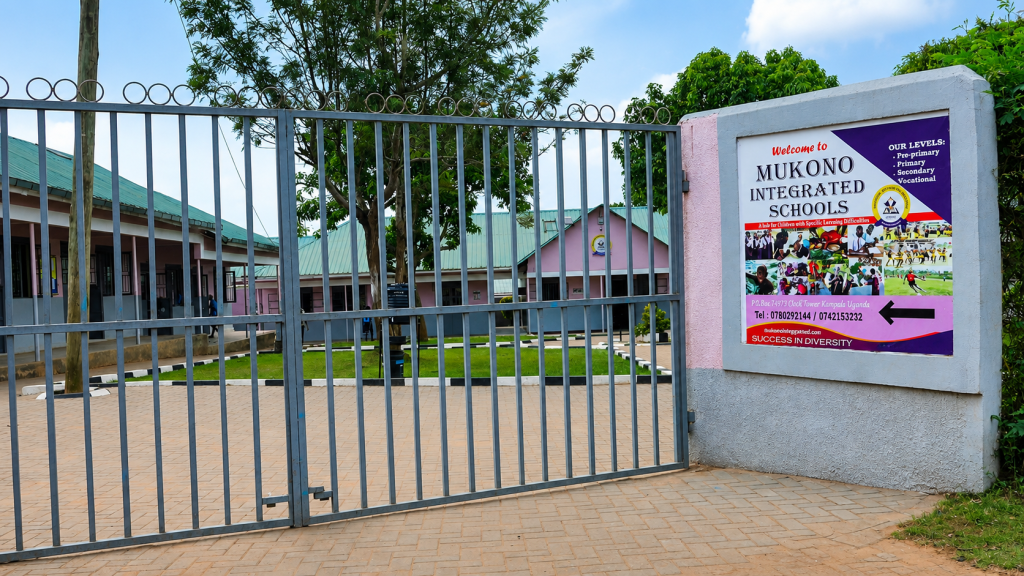
Joshua Munanura, 15, is a Senior Four student at Mukono Integrated School. He lives with dyslexia, yet his classroom routine looks much like that of any other student.
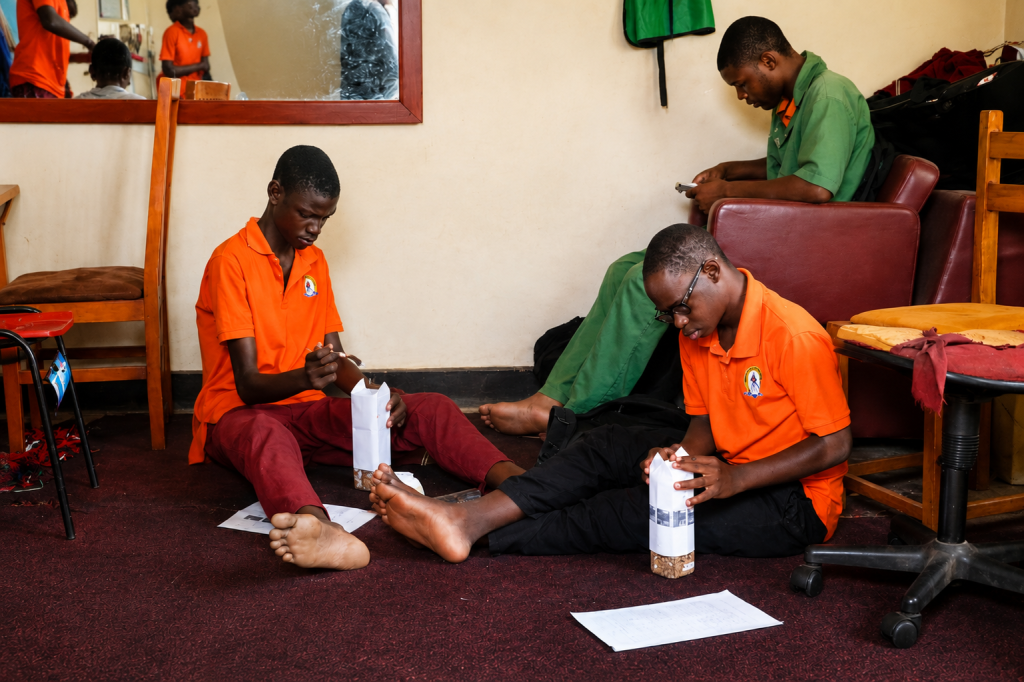
He studies alongside learners with different abilities, including students with dyslexia, autism, cerebral palsy, hearing and visual impairments, and physical disabilities. Together, they share lessons, conversations and dreams under the guidance of teachers trained to respond to their different learning needs.
It is a picture of what inclusive education is meant to achieve: a learning environment where every child belongs.
But Munanura’s education journey has not always been this way.
Dyslexia is a learning difference that mainly affects reading, spelling and writing, even though a person’s intelligence and ability to learn may be typical or above average.
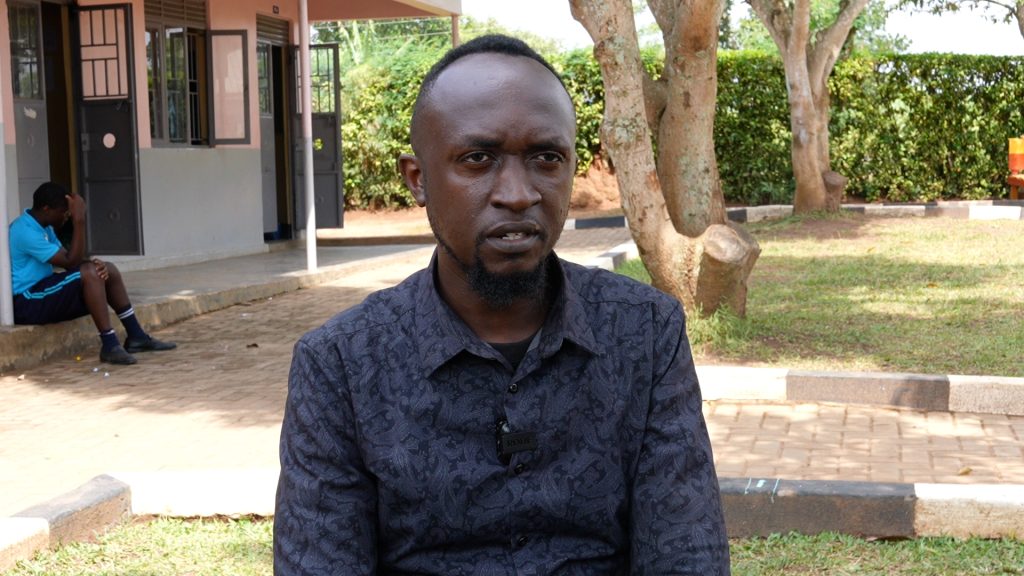
Dr. Eria Paul Njuki, a special needs specialist and director of Mukono Integrated School, says learners like Joshua can easily go unnoticed because their disability may not be immediately visible.
During his lower primary years, Joshua struggled to read but never told anyone. When his results came back poor, his mother assumed he simply did not understand what was being taught.
“In Primary Six, I almost dropped out,” Munanura recalls.
Overwhelmed by his struggles, he was eventually referred by a teacher to Dr. Njuki for assessment.
Munanura expected to be examined using machines. Instead, Dr. Njuki handed him a transcript and asked him to read it. Unable to do so, he broke down in tears. For the first time, he admitted that he could not read.
Dr. Njuki reassured him and identified dyslexia as the learning difficulty behind his struggles. He was admitted to Mukono Integrated School, where learners with dyslexia receive specialised support, including assistance from transcribers.
The intervention changed his education journey.
Munanura has since become one of the school’s standout students. He captains the school football team and previously served as games and sports prefect. He says the school has also helped him develop skills in technology and poultry farming, giving him ambitions that extend beyond the classroom.
His transformation demonstrates what can happen when a learner’s needs are identified and the appropriate support is provided.
At Mukono Integrated School, inclusive education is not merely a policy discussion. It is part of everyday school life, explains Nelson Mugabi Mutumba, the school’s Director of Studies.
Learners with different abilities study together, while teachers adapt lessons to meet individual needs. The teachers also undergo internal and external training in supporting learners with different disabilities.
“As a teacher, it is my role to observe, identify the learners’ needs and offer the help they need,” says Mugabi.
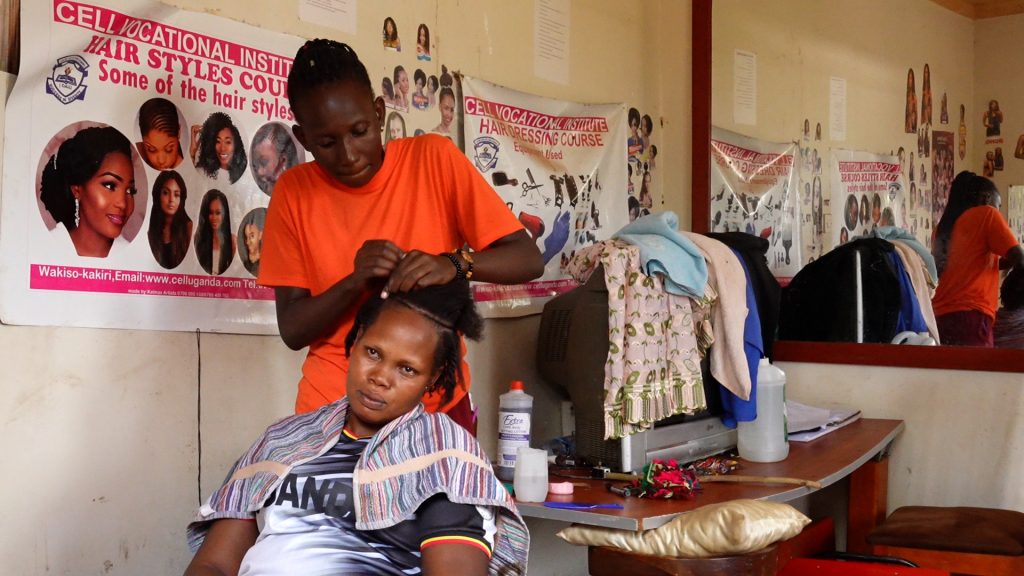
The school also runs a double curriculum, combining classroom learning with vocational training to prepare students for life and employment after school. Learners can acquire skills in fish, rabbit and poultry farming, tailoring, hairdressing, paver making, carpentry and crop production.
Teachers play a central role in making this model work. They adjust teaching approaches, provide additional support where necessary and encourage cooperation between learners of different abilities.
Mugabi says the benefits extend beyond learners with disabilities. Studying together allows children to appreciate diversity and understand that disability should not determine friendship, opportunity or a person’s potential.
Inclusion also happens outside the classroom.
Participation in sports, music, debate and other activities helps learners build confidence and relationships with their peers. For Joshua, captaining the football team represents something that once seemed distant: belonging.
Beyond Mukono Integrated School, however, Uganda faces a much more complicated reality.
Despite national commitments to inclusive education, many learners with disabilities continue to encounter inaccessible school infrastructure, inadequate learning materials, shortages of specialised teachers and limited financial support.
“The journey towards inclusion is still a call and not yet a reality in Uganda,” says Dr. Njuki.
The scale of the challenge is significant. Uganda’s 2024 National Population and Housing Census Disability Monograph found that 13.2 percent of Ugandans aged two years and above live with a disability. Among children, the figure stands at 8.8 percent.
More significantly for the education sector, the report found that 51.3 percent of school-age persons with disabilities between six and 24 years were out of school.
The figures raise an accountability question: if Uganda has committed itself to inclusive education, why are more than half of school-age persons with disabilities still outside the classroom?
The question goes beyond whether policies exist. It is also about whether government commitments are being translated into accessible classrooms, adequately trained teachers, learning materials and support services at school level.
Government spending provides another important measure of that commitment.
Parliament approved UGX 5.04 trillion for education in the 2025/26 financial year, representing a 12 percent increase from the previous financial year, according to the government’s Budget Framework Paper.
There are also disability-specific interventions. Uganda’s 2026/27 national budget allocated UGX 15.6 billion to a new National Child Disability Assistance Programme, according to UNICEF Uganda. The programme is expected to provide monthly support to families caring for children with severe disabilities.
It is being introduced as a pilot in 27 local governments before an eventual national rollout.
But allocating money is only the beginning. Transparency around how these resources are distributed, which children benefit and whether the funding results in improved access to education will be critical. Without effective monitoring, even increased funding may fail to address the barriers keeping children with disabilities out of school.
Disability rights advocate John Chris Ninsiima says the real test is not simply how much money is allocated, but whether it effectively reaches children and enables them to access essential care and support services.
The Uganda National Examinations Board also shows that thousands of learners requiring Special Needs Education support are progressing through the education system.
In 2025, 3,636 learners with special needs sat the Primary Leaving Examination, 708 sat the Uganda Certificate of Education and 540 sat the Uganda Advanced Certificate of Education.
Yet these learners enter an education system where many schools still lack accessible buildings, Braille materials, assistive devices and specialised teachers. Some institutions also struggle to provide therapy services for autistic learners or specialised meals for children who require them.
Rural schools face even greater challenges because of limited funding and access to specialised services, according to Dr. Njuki.
This creates another public accountability challenge. Inclusive education cannot depend entirely on whether a child happens to find a specialised institution such as Mukono Integrated School. Government has a responsibility to ensure that a learner’s chances of receiving an education are not determined by geography, household income or access to a particular school.
The Persons with Disabilities Act, 2020, provides a legal foundation for that responsibility.
“Children with special needs or disabilities have the right to inclusivity in education and other community activities,” says Ninsiima, who is also programmes director at the National Union of Disabled Persons of Uganda.
He says the law seeks to promote the rights of persons with disabilities, eliminate discrimination, guarantee equal access to services and ensure their full participation in society.
But legislation is meaningful only when its promises can be experienced in ordinary classrooms.
That makes monitoring equally important. Beyond announcing budgets and programmes, responsible government institutions must demonstrate how resources allocated to inclusive education are spent, where interventions are being implemented and whether they are reducing the number of children with disabilities who remain outside school.
Schools cannot carry that responsibility alone.
Government agencies, development partners, communities and parents all have roles to play. Parents can identify challenges early, advocate for their children and work with teachers, while communities can confront stigma and ensure disability is never used as a basis for exclusion.
Greater investment is still required in teacher training, accessible infrastructure, specialised learning materials and continuous monitoring if inclusive education is to reach every child who needs it.

Back at Mukono Integrated School, Munanura offers a glimpse of what that investment can achieve.
The boy who once reached Primary Six unable to admit that he could not read is now completing secondary school, captaining a football team, developing technology skills and imagining a future in which his learning difference does not define his possibilities.
His story is encouraging, but it also leaves Uganda with a difficult question.
How many other children are sitting silently in classrooms, struggling to read, being labelled poor performers or eventually dropping out?
Uganda’s progress towards inclusive education should therefore not be measured only by laws passed, budgets announced or programmes launched. The more meaningful measure is whether those commitments reach children in classrooms.
For Munanura, that support arrived before he walked away from education.
For thousands of other children with disabilities who remain outside Uganda’s schools, the promise of inclusion is still waiting to be fulfilled.
Solutions journalism from across Africa, in your inbox. No noise, just what is working.
© 2026 Solutions Now Africa — a Media Challenge Initiative project. All rights reserved.