Solutions Now Africa
No Result
View All Result
Friday, May 22, 2026
  • Home
  • Headlines
  • Quickies
  • Community Solutions
    • Climate Change
    • People Fixing Society
  • Changing Narratives
  • Fellowship
Subscribe
Solutions Now Africa
  • Home
  • Headlines
  • Quickies
  • Community Solutions
    • Climate Change
    • People Fixing Society
  • Changing Narratives
  • Fellowship
No Result
View All Result
Solutions Now Africa
No Result
View All Result
Home Climate Change

School Turns Leftovers Into Farm Supplement

Rhonet Atwiine by Rhonet Atwiine
2025/02/04
in Climate Change, Quickies
Reading Time: 5 mins read
School Turns Leftovers Into Farm Supplement

Bettering Food:

School Turns Leftovers Into Farm Supplement

Written by: Rhonet Atwiine. Photography by Akram Ndawula.


Documentary coming soon

It’s lunchtime at St. Kizito High School in Namugongo, outside Uganda’s capital Kampala. As the meal winds down one of the learners, Adasa Mugisha moves from table to table, collecting leftovers from her peers’ plates.

“I’m a student of Agriculture, and our class is running a food waste recycling project. This week, it’s my turn to collect the leftovers, which we use as the first step in our process,” she explains. 

The school does not discard any food waste, according to Mugisha. 

“Every bit of leftover food here is a valuable resource for creating nutritious animal feeds for our livestock,” she says, tipping the scraps into the bin.

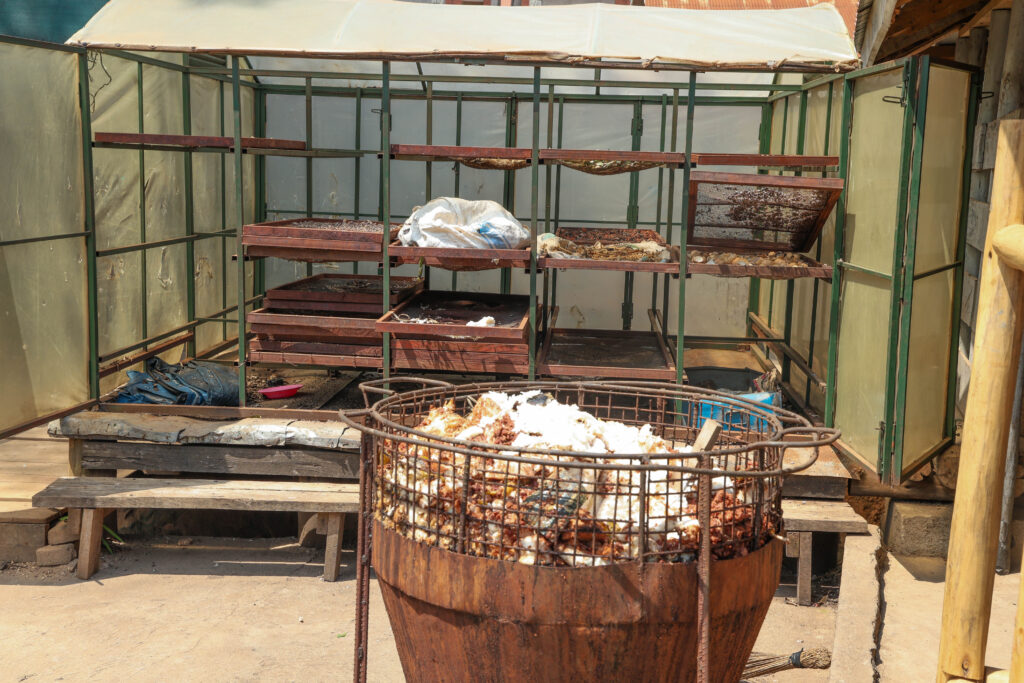
Once gathered, the waste is placed into a bin and left for a few hours to allow the liquids in the food to drain out. The drained food is then shredded into small pieces using an excluder machine and dried. 

A bin containing leftovers. Here, the bin drains liquid from the food before it is dried. Photo by Akram Ndawula. 

The school employs solar dryers that take about four days. 

“We use a solar dryer when the weather is sunny, but during the rainy season, we switch to a heat machine because it’s not affected by the weather. It runs on charcoal, known as briquettes, which are also made by the students. The machine has a fan that regulates the heat and removes moisture from the materials,” explains Stuart Kadoko, the school project coordinator

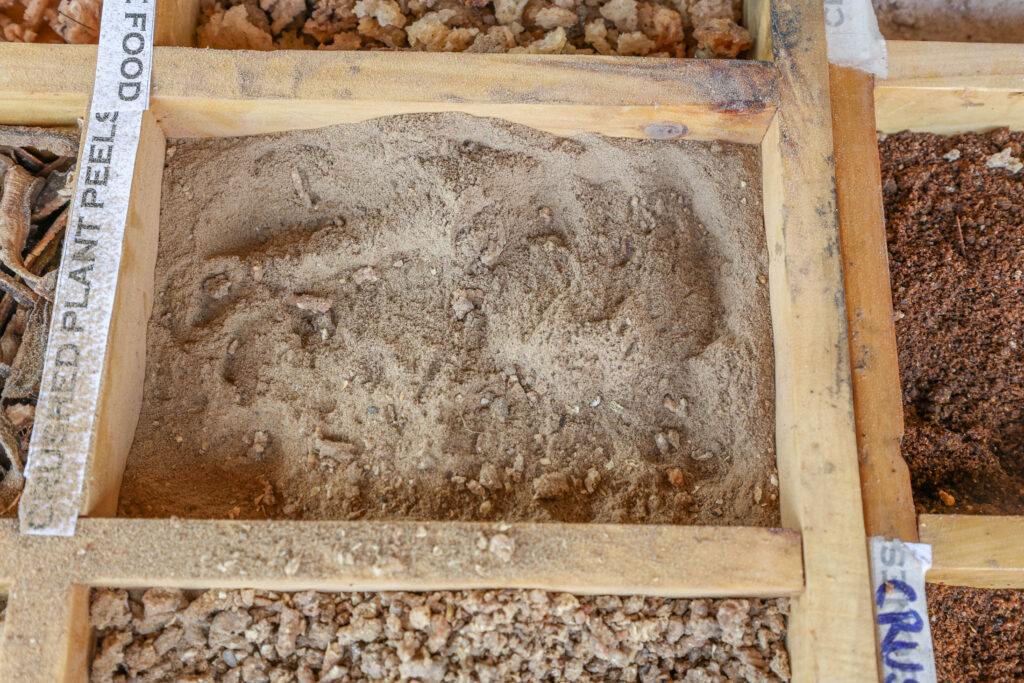
Once dried, the material is crushed into a fine powder that can be easily consumed by chickens and other animals.

This powder is then mixed with other ingredients to create a nutritious animal feed. For example, eggshells and bones are added for calcium, banana, and posho, rice for carbohydrates, and beans for protein.

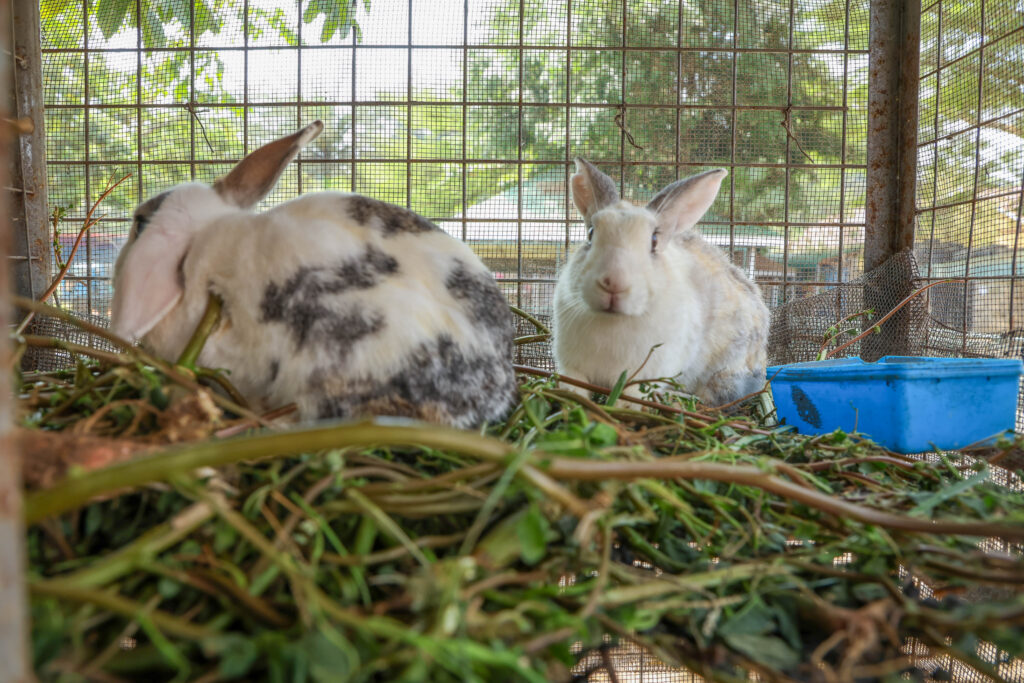
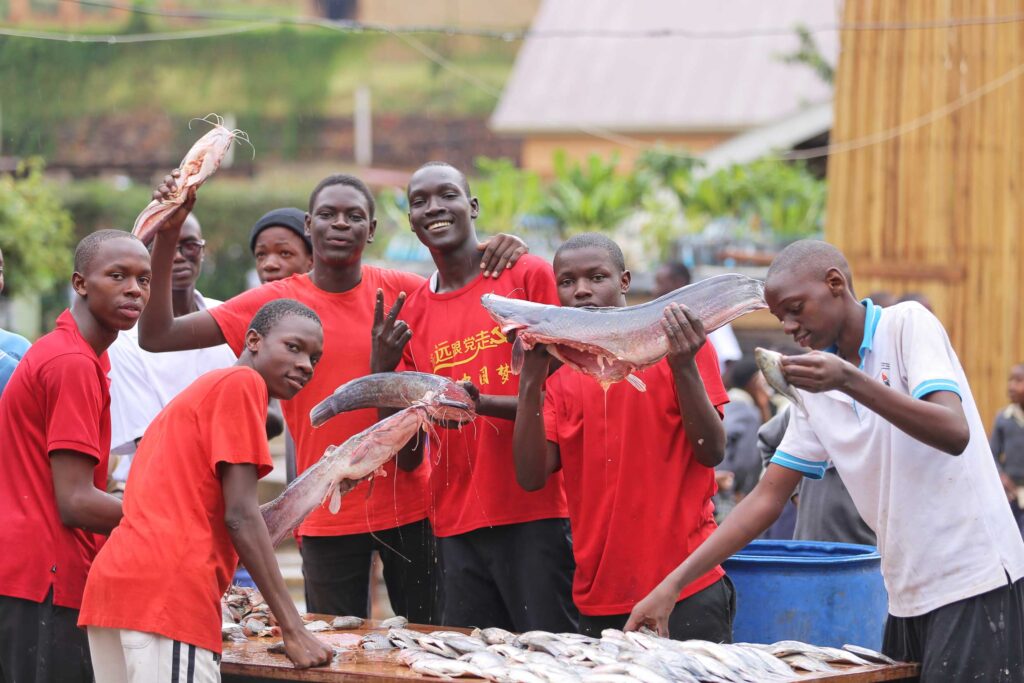
This feed sustains the school’s poultry, pigs, fish, and rabbits which, in turn, are served back to the students as nutritious meals.

Rabbits at the school farm. Photo by Akram Ndawula. 

Students pose with mudfish from the school fishpond. The fish is fed on food waste. Photo by Akram Ndawula. 

Ezekiel Kazibwe, the headteacher, explains that this program was designed as a hands-on approach to education, aimed at addressing gaps in the system. While students were doing well academically, they lacked the practical skills needed to be active and creative.

This model equips students with life skills that prepare them for the future and enable them to create jobs and generate income, all while contributing to achieving the Strategic Development Goals (SDGs).

“We call young people the future, and it’s our responsibility to prepare them to take the lead. Through this program, we are equipping them with the tools to solve everyday problems. That’s how our country will improve,” Kazibwe explains.

Already processed food. Photo by Akram Ndawula. 

Uganda is currently witnessing the fastest-growing and youngest population, with 22.7% of its population aged between 18 to 30 years. 

This rapid population growth brings about both opportunities and challenges, particularly the increasing demand for nutritious food alongside the rising generation of food waste.

Food waste in Uganda makes up 65-79% of the waste found in landfills, contributing significantly to environmental and health issues. 

The decomposing food generates harmful greenhouse gases, further exacerbating climate change and placing a strain on waste management systems.

Kampala alone produces 768 metric tons of food waste daily, as reported by the research team at Uganda Christian University.  Schools, as institutions serving large numbers of students, highly contribute to this challenge, with substantial food waste generated during meal times.

“In a week, we collect about 200kg to 300 kg of food leftovers. Imagine if we are to just discard all this food, ” says Florence Nambejja Kikomeko, the head of the Food waste recycling project at the school.

The school’s Holistic and Practical Skills Education Curriculum also aims to incorporate technology into education, enhancing students’ learning experiences through this food waste recycling project.

Kazibwe adds that the model is built around climate awareness and sustainability, focusing on empowering young people to tackle environmental challenges. This approach brings the next generation to the forefront, ready to navigate and address pressing community issues, such as food waste.

Recent News

How Climate Smart Farming is Changing Farmers Prospects in Northern Uganda

How Climate Smart Farming is Changing Farmers Prospects in Northern Uganda

December 16, 2025
Sowing Despair: How Dry Spells are Sending Mothers Into Depression

How Farmers are Collaborating to Manage Unpredictable Climate

December 16, 2025
Solutions Now Africa

We are Africa's first solution journalism newsroom producing immersive stories on innovations, models and systems that are working around Africa. We also work to produce alternative solutions stories to challenge negative narratives about the continent.

© 2022 - Media Challenge Initiative | All Rights Reserved .

No Result
View All Result
  • Home
  • Headlines
  • Quickies
  • Community Solutions
    • Climate Change
    • People Fixing Society
  • Changing Narratives
  • Fellowship

© 2022 - Media Challenge Initiative | All Rights Reserved .