Grassroots Healing:
Community Therapy Steps in for Moms As Mental Health Services Fail
Written by: Laura Nagaba
Rhona (a pseudonym), a 29-year-old mother in Mukono, expected her first child to bring joy and warmth. Instead, after giving birth, she was overwhelmed by uncontrollable nightly crying, detachment from her baby, intense anger and deep sadness.
She felt she had failed, “I thought of even killing myself”. Later, she was diagnosed with postpartum depression (PPD), a condition that clinical studies show affects nearly 1 in 4 mothers in Uganda.
The postpartum period is often idealised as a time of happiness for mothers and families, but it is also a period of serious vulnerability. Although many think of the “baby blues” as the only emotional challenge, PPD is far more severe.
It is a mood disorder that begins after childbirth and includes persistent sadness, exhaustion, loss of appetite, irritability and a feeling of inadequacy. If untreated, it harms not only the mother’s well-being but also her ability to bond with and care for her newborn.
“With so much anger and hatred for myself, I didn’t want my friends around and my husband feared coming home,” Rhona says.
Rhona is now part of a community support initiative that supports women out of depressive disorders through talk therapy. It is supported by Strong Minds Uganda, a non-profit organization that has led the treatment of depression in the country.
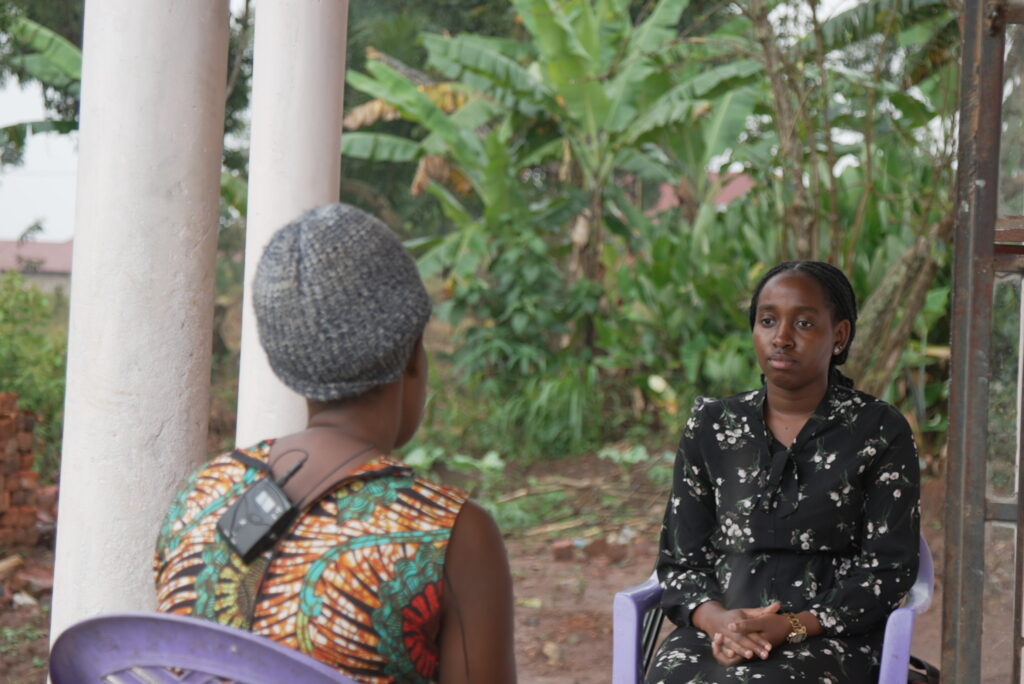
A mother shares about her PPD ordeal with Laura Nagaba (in black). Photo by George Mukisa.
According to Strong Minds, maternal depression poses serious risks to both mother and child, and it’s linked to complications like preeclampsia, gestational diabetes, and premature birth, and its consequences have far reaching effects.
“Depressed mothers are also less likely to follow doctors’ orders and adhere to prenatal, leading to suboptimal outcomes for both mother and baby … untreated postpartum depression can erode a mother’s sense of self and disrupt the crucial bond between parent and child, contributing to a cycle of poverty, poor health, and isolation,” the organization says.
Dr. Emma Amadriyo, a gynaecologist at Nakasero Kampala, emphasises that while childbirth takes a heavy physical toll, the emotional suffering is largely invisible.
“PPD has a spectrum, there is a mild version called postpartum blues, then depression phase itself, then there is a severe side called postpartum psychosis,” states Amadriyo. She warns that without timely mental health support; postpartum depression adversely affects the entire family system.
Dr. Emma Amadriyo explains postpartum Depression
Globally, PPD affects about 10-15% of mothers in high-income countries. In low- and middle-income countries such as Uganda, however, the prevalence is much higher, with estimates ranging from 6% to 60%, depending on location and study.
A 2019-2020 study in the Mbarara and Rwampara districts found a prevalence of 27.1%, showing how widespread PPD is in Uganda.
Despite such high numbers, Uganda’s health system remains focused on physical maternal outcomes reducing maternal mortality, preventing infections, bleeding, improving antenatal and delivery care while largely neglecting maternal mental health.
Mental health is under-funded, and much of maternal health financing still comes from private sources and out-of-pocket spending.
Dr. Richard Mugahi, Commissioner for Maternal, Reproductive and Child Health at the Ministry of Health, says Uganda lacks stand-alone services for postpartum depression (PPD), which remains a largely overlooked part of maternal care.
“PPD is included within the broader mental health package at postnatal clinics, but there is no dedicated framework or national focus,” he said.
The Ministry of Health has introduced a High-Risk Pregnancy Identification Tool to help health workers detect conditions like PPD. Antenatal cards given to mothers include mental health screening sections, but implementation is inconsistent.
“Health workers often miss the signs because depression and anxiety are not always visible. It’s often up to the mother to speak up,” Dr. Mugahi noted.
He also acknowledged a shortage of trained mental health providers, especially at the local level, and said while the Ministry of Local Government supports service delivery, gaps remain in both awareness and staffing.
While the government has made efforts to integrate mental health into maternal care, Uganda still faces a severe shortage of mental health professionals.
According to the Ministry of Health, the country has fewer than 50 psychiatrists and around 600 mental health professionals serving a population of over 45 million.
The counsellor-to-patient ratio remains critically low, and many lower-level health facilities particularly in rural areas lack even a single trained counsellor.
Without accessible mental health support at the community level, many mothers experiencing PPD go undiagnosed and untreated, highlighting the urgent need for targeted investment and staffing to close this gap.
Psychologist Dr. Moreen Kawoozo, Safe Places mental clinic, observes that Uganda’s culture deeply idealises motherhood.
A woman suffering depression fears being seen as weak, ungrateful, or failing as a mother. That stigma delays recognition and treatment and intensifies suffering, “the biggest challenge remains inadequate information leaving many mothers struggling in silence without emotional support.”
Although Uganda has policies that align with international best practices such as adopting WHO’s mhGAP program to train non-specialist health workers in mental health care there is limited integration of PPD screening or mental health checks into routine antenatal or postnatal care.
Midwives and many frontline workers lack training to identify symptoms early, and screening tools are not routinely used. Mental health services are being supplemented by non-profit organizations.

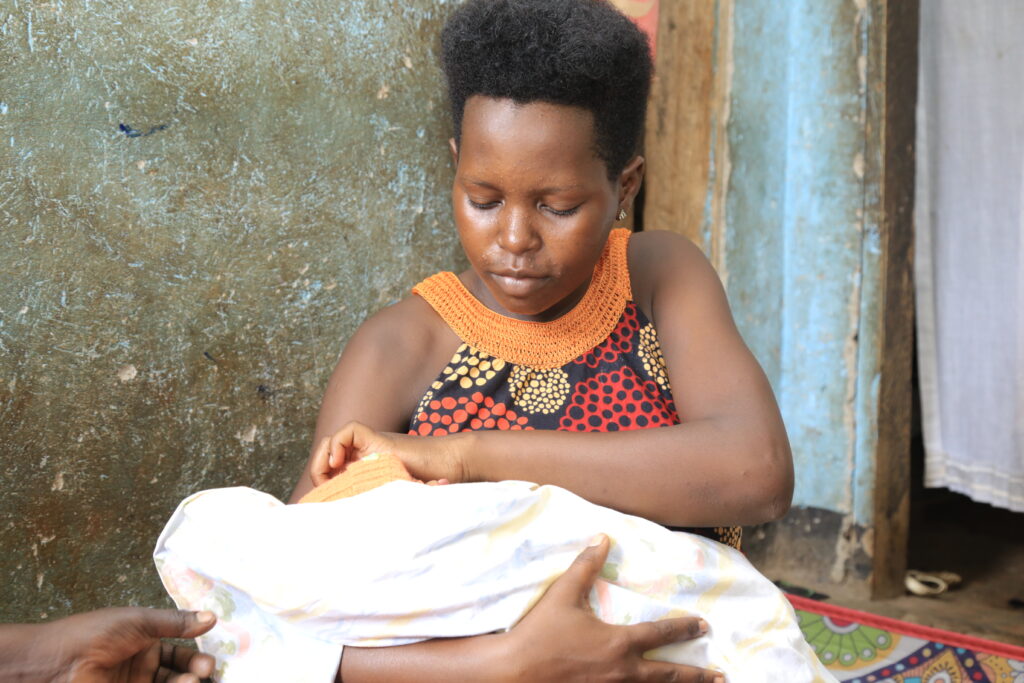
A mother with her newborn. PPD begins after childbirth and includes persistent sadness, exhaustion, loss of appetite, irritability and a feeling of inadequacy. Photo by Richard Mugambe.
Experts recommend urgent policy reforms such as budget allocations specific to maternal mental health, routine use of screening tools, training frontline providers, stronger community support systems, clear monitoring and indicators for mental health outcomes in maternal health programs.
For many women, recovery is possible. Hawa, another mother, benefited from group counselling with StrongMinds. She realised she was not alone and gradually regained the ability to bond with her baby and feel joy, replacing guilt with hope.
“Once we started sharing our experiences in the sessions, I realised that our experiences are on different levels but we are all going through the same thing” added Hawa.
Uganda’s Health Sector Budget Framework Paper (2020/21) shows progress on reducing rates of maternal mortality, and tracking physical maternal health indicators (antenatal visits, institutional deliveries), but there are no specific budget lines, monitoring or accountability for maternal mental health. Civil society calls for transparency: publicly available allocations for mental health, performance indicators (e.g. how many mothers are screened for PPD), annual progress reports tracking both physical and emotional well-being.
The country has started adopting good models (mhGAP, NGO interventions) but still treats postpartum depression largely as an afterthought to maternal care.
Experts argue that safe motherhood must include mental health as a core component, with proper training, screening, financing and community support.
As Hawa says: “Postpartum depression doesn’t mean you are weak, it means you need support. With the right help, we can heal.” Her recovery, like many others’, shows that addressing these silent cries can allow mothers, children and families to truly thrive.