

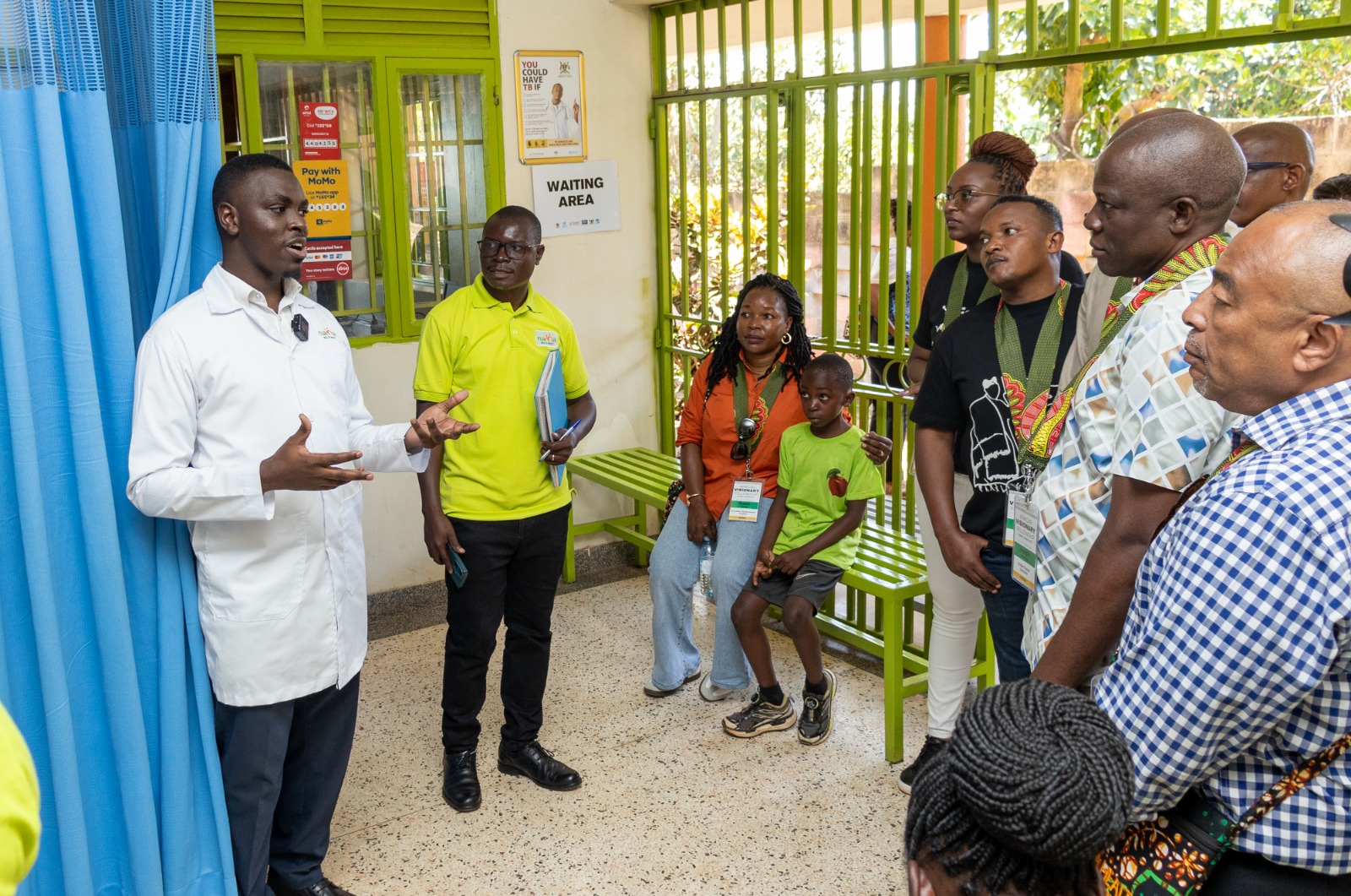
When a young child develops a high fever in the middle of the night, a mother living in a rural Ugandan community faces a difficult decision. The nearest health facility is kilometres away, transport is uncertain, and the journey can become even more challenging in the dark. She needs medical help, but getting it is not always straightforward.
For families in remote communities, this is more than an occasional inconvenience. It is a reality that can determine how quickly a pregnant woman receives antenatal care, whether a newborn gets the attention needed after leaving hospital, or how soon a sick child receives treatment.
For Nama Health Impact, addressing this gap begins much closer to home, with community health workers who live among the people they serve.
The organisation uses an already established government community-based human infrastructure to connect households to essential health information and services, helping families identify health concerns early and access care through nearby health facilities.
Pauline Picho Keronyai, the organisation’s Executive Director, says distance remains one of the major barriers to healthcare access in rural communities.
“Just imagine in the middle of the night, a mother gets a baby who is spiking fevers. What does she do without a community health worker nearby?” she asks.
Community health workers are central to Nama Health Impact’s response because they are already part of the communities they serve.
Their proximity allows them to identify health concerns, provide guidance, follow up with families and connect people to formal healthcare services when necessary.
Connecting households to health facilities
Nama Health Impact works with community health workers to bring healthcare closer to households while strengthening connections with government health facilities.
The model recognises that community-based care cannot replace hospitals or professional medical services. Instead, it creates a link between households and the wider health system, helping patients receive appropriate attention when they need it.
Community health workers can identify pregnant women who have not started antenatal care, encourage those already attending to complete their appointments and follow up on childhood immunisation. They can also identify children who are unwell and connect families to appropriate services.
Through Integrated Community Case Management (iCCM), trained community health workers can assess and manage certain common childhood illnesses within their authorised scope. Children presenting with severe symptoms or danger signs are referred to health facilities for further assessment and treatment.
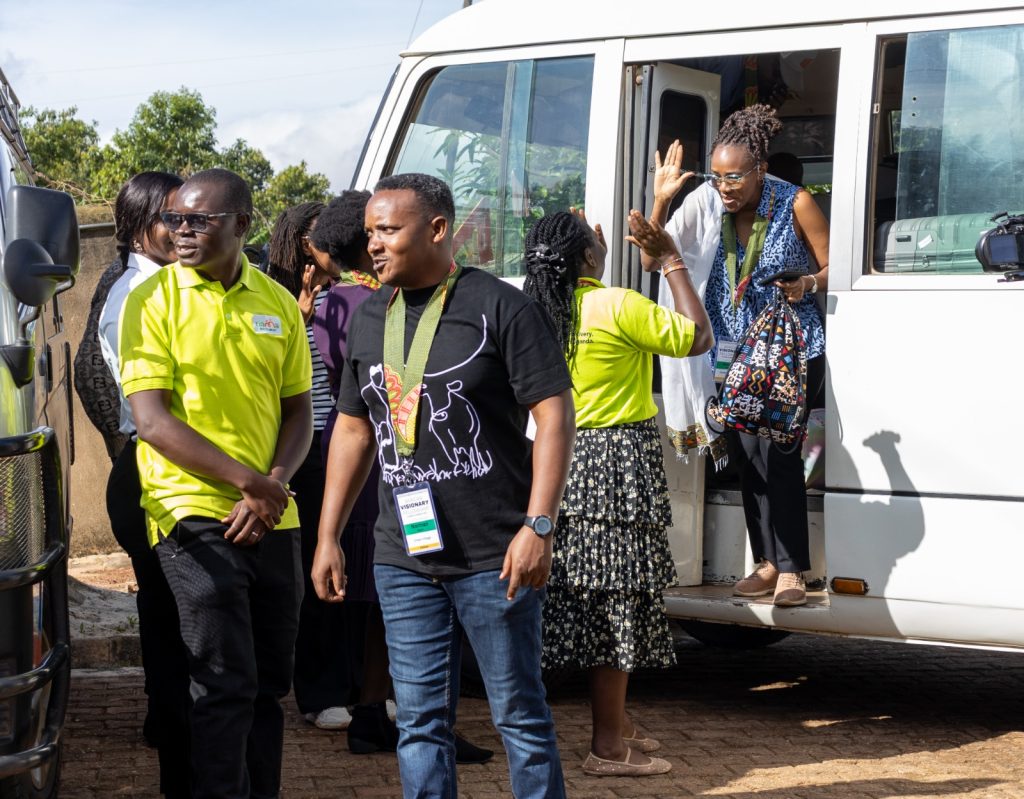
The organisation also works with government health teams and public health facilities to strengthen the quality and continuity of care.
“We offer capacity building for some of these health facilities that are public so that when patirnts move there, they can find services that are really up to the standard that is desired for them,” Pauline says.
This collaboration is important because identifying a health problem is only the first step. Patients must also be able to access appropriate treatment once they are referred.
Nama Health Impact hopes that some of the approaches it has developed can be adopted and replicated by government in other districts.
“We work together with the government and hope that the government can take some of these innovations, these ideas, and also replicate them in other districts in the country,” Keronyai, says.
Following up on mothers and vulnerable newborns
For newborns who have spent time receiving specialised care in hospital, returning home can be another vulnerable stage.
Sam Matekha, Nama Health Impact’s Programmes Manager, explains that the organisation uses a two-way referral model. Health facilities connect patients to community health workers, while community health workers also identify people within households who need attention at health facilities.
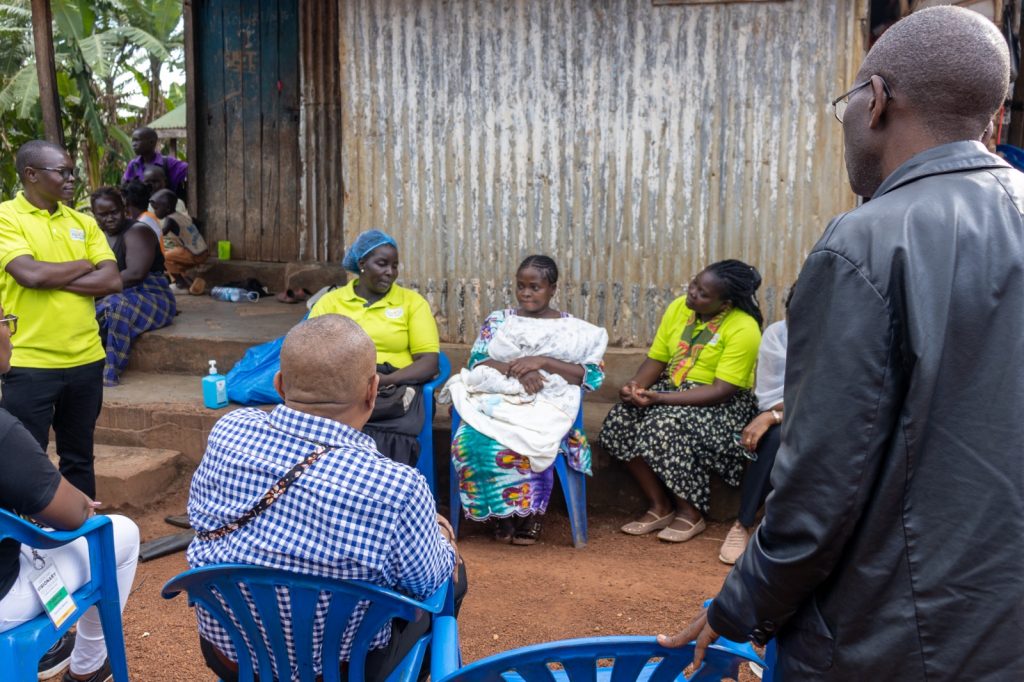
One example is the organisation’s Kangaroo Mother Care (KMC) programme, which supports small and vulnerable newborns.
When a baby is ready to leave the neonatal intensive care unit (NICU), the health facility can link the mother and child to a community health worker before discharge. This creates an opportunity for follow-up within the community, helping families continue receiving support after leaving the hospital.
Matekha explains that these babies require particular attention because of their vulnerability.
“Instead of this infant going direct to the community, we opt to link them to a community health worker for follow-up because at this age of the infant, they are really very vulnerable,” he says.
The approach creates continuity between hospital-based care and the household. Rather than leaving mothers to navigate the transition alone, community health workers become part of the support system.
For a mother returning home with a vulnerable newborn, having someone within the community who can follow up and help connect her to health services can make an important difference, owing to the fact that in rural Uganda, on average, patients spend about 70 to 90 minutes traveling to a public healthcare facility, depending on the region, terrain, and transport
The programme also demonstrates why maternal and newborn healthcare cannot end at the hospital discharge desk. Families need support during the period when they are adjusting to caring for a baby who may require additional attention.
Using digital tools to strengthen community healthcare
Nama Health Impact is also incorporating digital technology into its community health programmes.
One of the tools it uses is the COM Care Connect application, which supports community health workers conducting follow-up visits for vulnerable newborns under the Kangaroo Mother Care programme.
Matekha explains that the application allows community health workers to record information about the newborns they visit and provides clinical decision-support guidance to help them determine appropriate next steps.
For example, when a community health worker records a newborn’s vital signs, the system can flag concerning readings and guide the worker towards the necessary action, including referral to a health facility.
The application therefore goes beyond routine reporting. It helps workers document their observations and recognise when a newborn may require additional medical attention.
Nama Health Impact also uses a digital tool to document its Interpersonal Psychotherapy for Groups (IPTG) programme, which supports women and adolescent girls experiencing mental health challenges. Unlike COM Care Connect, this application is primarily used for programme documentation.
The organisation also supports community health workers in using the government’s electronic Community Health Information System (eCHIS) to manage community health records.
These tools demonstrate how technology can strengthen community-based healthcare by improving documentation, supporting decision-making and helping workers follow up with patients.
However, their effectiveness also depends on appropriate training, consistent use and the availability of health facilities that can respond when referrals are made.
Building trust through community mental health support
Healthcare access is not only about treating physical illness. For many women and adolescent girls, emotional and psychological challenges can also affect their well-being.
Nama Health Impact addresses this through group-based mental health support, including Interpersonal Psychotherapy for Groups, which brings women and adolescent girls together to discuss their experiences and receive structured support.
The sessions are facilitated by trained community health workers and create opportunities for participants to share personal challenges in a supportive environment.
Pauline says the sessions also strengthen relationships between community health workers and the people they serve. She adds that participants are able to share personal experiences because they trust the community health workers to handle their stories confidentially.
“That is a huge win because then the community begins to trust the community health workers, trust the work that they’re doing, and therefore reach out to them when they need them,” Keronyai says.
This trust is particularly important in mental health support, where fear of judgement, stigma or a lack of privacy can prevent people from seeking help.
By bringing support closer to communities, Nama Health Impact creates opportunities for women and adolescent girls to access care in settings that are more familiar to them.
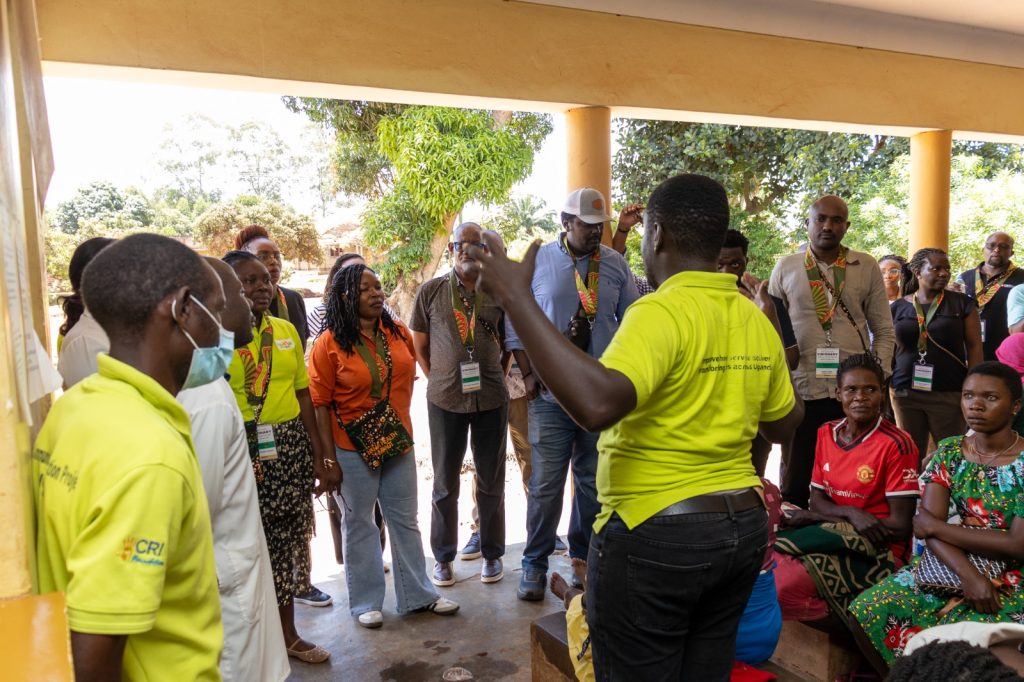
Learning across borders to strengthen community healthcare
During the African Visionary Learning Visit, African Visionary Fellows had an opportunity to observe how community-based healthcare can improve access to essential services, particularly for vulnerable mothers and children.
The visit included Nama Health Centre III, a community mental health session, a planned site for expanding the organisation’s services and Kawolo Hospital, where fellows visited the neonatal intensive care unit and learned how community health workers support families after discharge.
For Pauline Picho Keronyai, the exchange created an opportunity for organisations and leaders from different African countries to learn from one another.
One of the key approaches highlighted during the visit was the community-based Kangaroo Mother Care model, particularly the connection between hospitals and community health workers.
Pauline hopes fellows will consider adapting the approach in their own countries, especially those working with hospitals, maternity centres and community health programmes.
“Instead of discharging the mothers and their babies in the hands of nobody, they can discharge these mothers and their babies in the hands of community health workers who follow them up in the community,” she explains.
The fellows also observed group-based interpersonal psychotherapy sessions facilitated by community health workers for women and adolescent girls experiencing depression and anxiety. These sessions demonstrated how community-based mental health support can help build trust and make services more accessible.
Beyond service delivery, the exchange highlighted the importance of collaboration between community organisations, government health teams and hospitals. It also provided an opportunity for fellows to exchange ideas about organisational growth, resource mobilisation and ways of strengthening their work.
For Nama Health Impact, the learning visit was an opportunity not only to showcase its approach but also to contribute to a wider conversation about African-led solutions to healthcare challenges.
Bringing healthcare closer, one household at a time
For a mother living far from a health facility, access to healthcare is shaped by more than the availability of doctors, medicines or hospital buildings. It is also influenced by distance, transport, information and whether someone can help her navigate the health system when a problem arises.
Nama Health Impact’s model responds to these realities by placing community health workers at the centre of the relationship between households and health facilities.
From identifying pregnant women who need antenatal care to following up on vulnerable newborns, supporting childhood illness management and facilitating mental health sessions, the organisation demonstrates how healthcare can extend beyond the walls of conventional facilities.
For the African Visionary Fellows, the experience offers a practical lesson: improving healthcare access does not always begin with building another hospital. Sometimes, it begins by strengthening the people who already live within communities, equipping them with the skills and tools to connect families to the services they need.
And for the mother whose child develops a fever in the middle of the night, having a trained community health worker nearby could mean having someone to turn to, guidance on what to do and a connection to the healthcare system.