As an intern at Chapter Four, Praise had contacted then-Executive Director Nicolas Opio and lawyer Anthony Masaki before the demonstration, securing their commitment to pro bono legal assistance.
Public support amplified Chapter Four’s efforts, resulting in her release on bail. “I now mentor five young individuals, yet court proceedings remain unresolved,” Praise says, advocating for early legal intervention.
The judicial system’s backlog stems from a shortage of 655 judicial officers for 45 million citizens, compounded by political pressures that prolong detentions, especially in cases like Praise’s, breaching the 48-hour detention limit.
“In 2024, our organization facilitated the release of over 300 young individuals,” says Henry Byansi, current program manager at Chapter Four Uganda, a civil liberties organization dedicated to justice.
Systemic obstacles, including 500,000 pending cases and external directives, hinder progress. The Legal Aid Bill, stalled in Parliament, could expand access to legal representation, significantly reducing prison overcrowding.
Ignorance of legal processes exacerbates delays. Many detainees are unaware that bail requires sureties with national identification documents, leaving them confined as families struggle with procedural requirements.
“Our attorneys secured bail for over 100 youth in 2024,” says Musinguzi Stephen, staff attorney at Chapter Four. “Judicial public awareness campaigns could educate citizens on their rights.”
Courts often appear unapproachable, deterring access to justice. Without education on 48-hour detention limits or bail procedures, thousands remain detained, unlike Praise, who attends hearings while free.
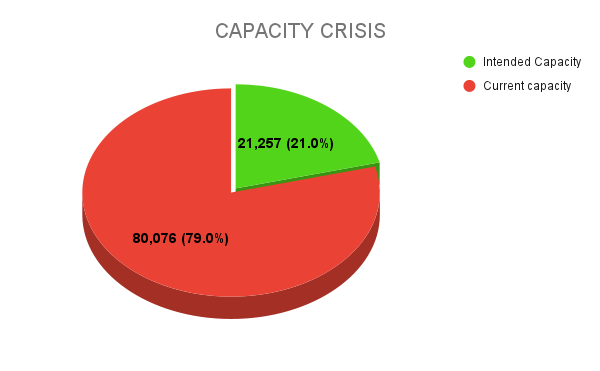
The judiciary grapples with over 500,000 pending cases, with 46.2% of 80,000+ inmates on remand, contributing to Luzira’s 377% overcrowding, per Justice, Law and Order Sector (JLOS) reports.
“Legal assistance accelerates up to 40% of hearings,” says His Worship James Ereemye Mawanda, Public Relations Officer for the Judiciary of Uganda. Most detainees, however, await trial in confinement.
Technological advancements like e-Justice and the Legal Aid Bill could release thousands annually. Public disclosure of detention data would promote accountability, enabling reforms such as mobile courts to ensure equitable justice.
Praise continues her advocacy, mentoring youth to navigate the system. “Young people must seek legal aid early, as delays confine thousands without hearings,” she says. With transparency and expanded legal support, justice could reach all.
Efforts to address these gaps extend beyond single organizations. The Legal Aid Service Providers Network (LASPNET) coordinates legal aid across Uganda, but faces major challenges in reaching those who need it most.
“Very few people call our Legal Aid Call Centre for help,” says Duncan Keitirima, LASPNET’s Legal Aid Call Centre Coordinator. “Most detainees don’t know they have a right to a government lawyer or that legal aid exists.”
LASPNET responds by setting up legal tents inside prisons, especially in the central region. There, they teach inmates about their rights and how to access aid.
“This is a good step,” Keitirima explains. “But the number of detainees keeps rising because we work mainly in the central region and have a low budget due to limited government funding.”
Awareness remains low nationwide. Many prisoners learn about legal aid only after months or years behind bars. LASPNET’s prison visits educate hundreds, but reach is limited.
“People are ignorant of their rights,” Keitirima adds. “They don’t know they can demand a lawyer or challenge prolonged detention.”
LASPNET’s work mirrors efforts by groups like Chapter Four, but highlights the scale of the problem. While some get help, most do not.
The Legal Aid Bill, pending since 2018, could change this. It would fund and expand services, ensuring aid reaches rural areas and all prisons.
“Without funding and national reach, we can only do so much,” Keitirima notes. “The Bill would allow us to serve everyone, not just those near Kampala.”
Chapter Four and LASPNET both fight the same battle. One offers direct aid; the other builds awareness and coordinates. Together, they show the need for system-wide change.
“Both organizations help,” says Praise. “But most youth like me never hear about them until it’s too late.”
The 88% justice access barrier, reported in the 2023 HiiL Justice Needs Survey, reflects this gap. Poverty, distance, and ignorance keep people trapped.
Public campaigns, better funding, and the Legal Aid Bill could close it. Until then, thousands wait in silence.